
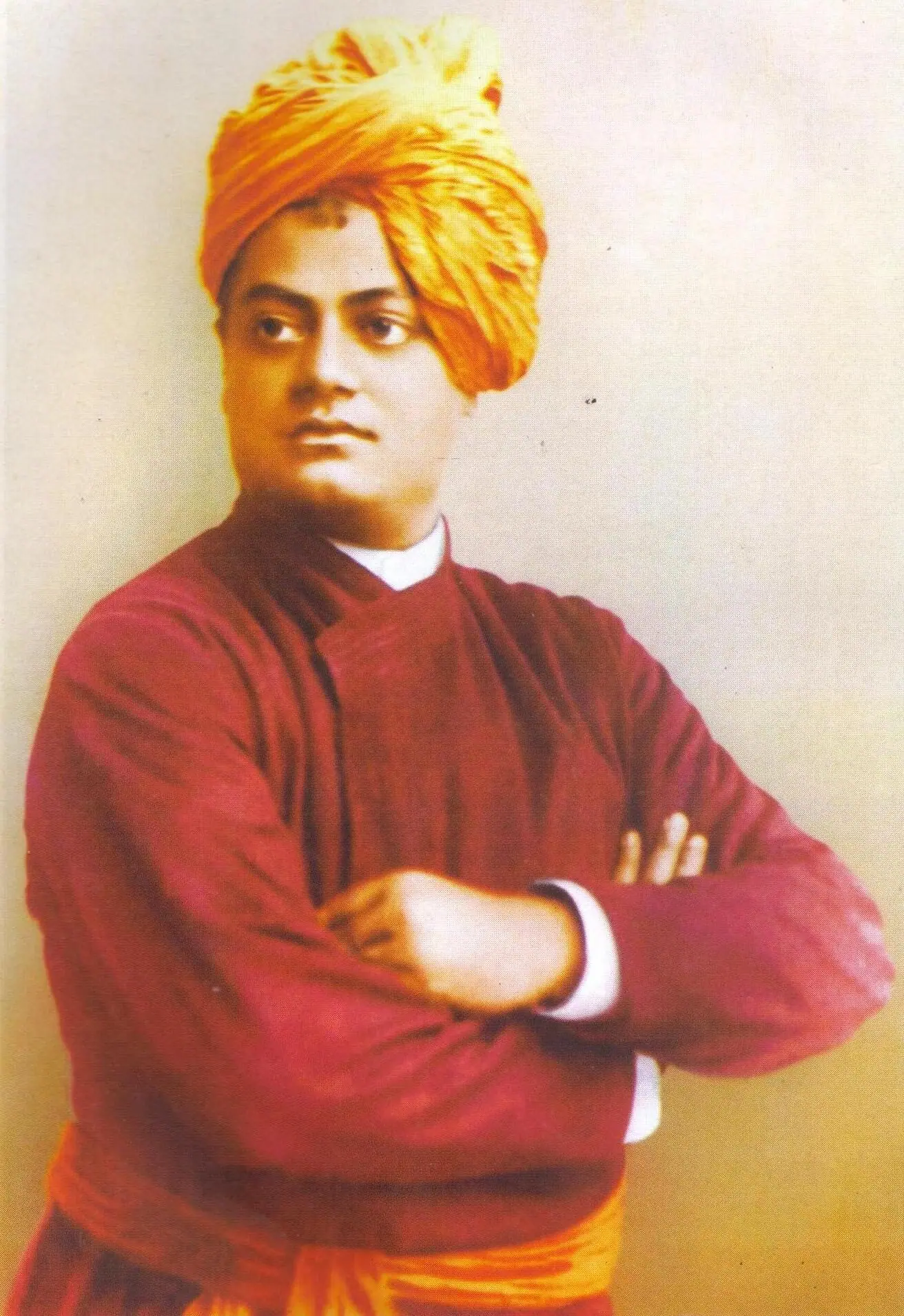

The long road of a wandering monk
Born Narendranath Datta in Kolkata on 12 January 1863, he grew into a sharp, sceptical young man who wanted proof for everything. Around 1881 he met Sri Ramakrishna Paramahamsa at Dakshineswar. His famous question, have you seen God, and Ramakrishna's simple reply, yes, as I see you, changed the course of his life.
After Ramakrishna's death in 1886, Narendra and his brother disciples took monastic vows. A few years later Swami Vivekananda set out alone as a wandering monk and travelled the length of India. He saw both royal palaces and village poverty, and his letters show that the journey was his education in understanding the country.
His travels across India ended at Kanyakumari, at the country's southern tip. According to his biographers, late in 1892 he swam out to a rock off the shore and meditated there, resolving to work for the uplift of India's poor. The site is now the Vivekananda Rock Memorial, opened in 1970, and it draws visitors from across the world.
During these travels he learned of a Parliament of Religions to be held in America. With help from young followers in Madras and supporters such as Maharaja Ajit Singh of Khetri, he sailed from Bombay on 31 May 1893 and, travelling by way of Japan and Canada, reached Chicago in July.
No invitation, no introduction
Trouble began as soon as he arrived. The Parliament was not until September, and delegates needed credentials from a recognised organisation, which he did not have. In an expensive city, his money was running out fast.
To save money he went to Boston, where he met Professor John Henry Wright of Harvard University. After long conversations, Wright was so impressed that he wrote to the organisers himself to recommend him. Biographies record this not as luck but as recognition of Vivekananda's learning.
Returning to Chicago, he lost the organisers' address and spent a night in an empty boxcar in a railway yard. The next morning, as he wandered the streets, a woman, the wife of George W. Hale, noticed him, took him home and helped him reach the Parliament office. The Hale family became his lifelong friends.
11 September 1893, the Art Institute
The Parliament was held alongside the World's Columbian Exposition. On the opening day, representatives of the world's religions sat on the platform, facing an audience of thousands. Vivekananda later wrote that he was so nervous he kept letting others speak before him.
When he finally rose that afternoon, he began with five words: Sisters and Brothers of America. According to eyewitness accounts, the audience rose to its feet and applauded for a long time. After a day of formal addresses, his warmth touched people.
In his short speech he said he spoke for a religion that had taught the world tolerance and universal acceptance. He echoed a verse from the Shiva Mahimna Stotra: as streams rising in different places all mingle their waters in the sea, so different paths lead to the one God. He cited the Gita (4.11), whoever comes to me through whatever form, I reach him, and wished for an end to fanaticism and bigotry.
After the Parliament: a new identity
On 19 September he read his longer paper on Hinduism, and on 27 September he spoke at the closing session. American newspapers counted him among the most impressive speakers of the Parliament. For the next three years he lectured in the United States and England and founded the Vedanta Society.
When he returned to India in January 1897, he was welcomed with historic celebrations from Colombo to Almora. On 1 May 1897 he founded the Ramakrishna Mission, guided by the ideal of one's own liberation and the welfare of the world. He died at Belur Math on 4 July 1902, aged just 39.
Why the speech is still remembered
The Chicago speech came at a time when India was under colonial rule and the West knew little about Indian religions, or knew them through distorted images. A young Indian monk presented his tradition with confidence and humility, and in the same breath spoke of respect for all faiths.
Since 1985, India has marked his birthday, 12 January, as National Youth Day. And 11 September, a date now also linked to tragedy around the world, is remembered in India as the day a message of tolerance and fellowship was offered to the world.