
Hanuman Leela
The Bridge of Arrows and the Monkey Banner: How Hanuman Came to Arjuna's Chariot
Editorial team
Gods, goddesses and the avatars of Vishnu: stories, forms and traditions.
19 stories
Editorial team
Editorial team

Editorial team
In the seventh book of the Bhagavata Purana, the demon king Hiranyakashipu tries again and again to kill his devoted son Prahlada. At last Vishnu appears from a pillar as Narasimha, half man and half lion, and ends the king's life while honouring every condition of his boon.

Editorial team
Folk tradition tells two well-known stories of Shani and Hanuman. In one, Hanuman frees Shani, held captive by Ravana in Lanka. In the other, Shani comes to cast his gaze on Hanuman, is overwhelmed by Hanuman's strength and asks forgiveness. Both end with Shani's promise not to trouble Hanuman's devotees, and the oil for his wounds gives rise to the custom of offering oil to Shani.
Editorial team
According to the Valmiki Ramayana, Hanuman is the son of the monkey king Kesari and Anjana, born through a blessing of Vayu, the wind god, which is why he is called the son of the wind. The Shiva Purana regards him as a partial incarnation of Shiva. This article tells the full birth story while keeping these traditions distinct.
Editorial team
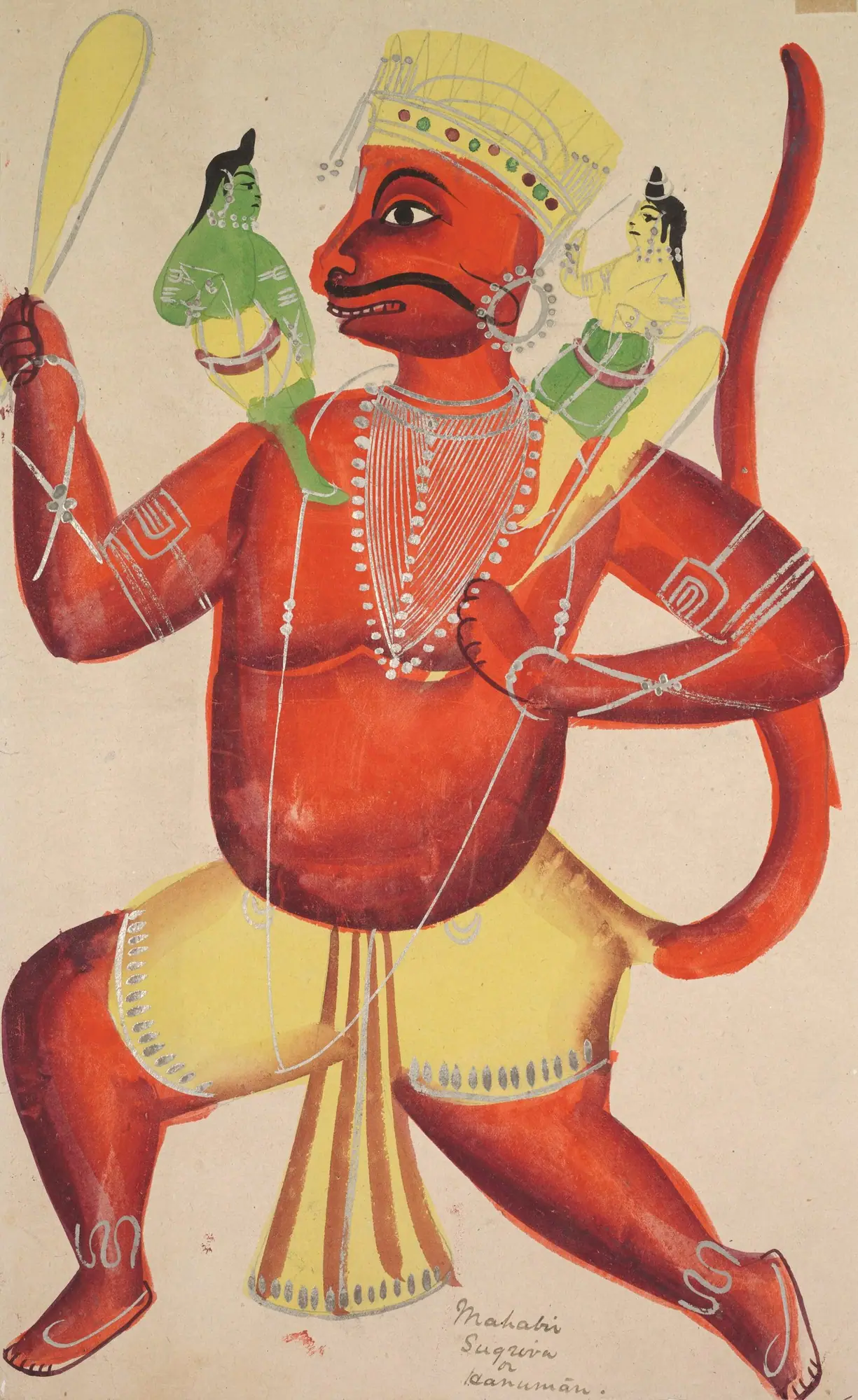
According to a folk tale, Hanuman saw Sita putting sindoor in the parting of her hair and asked why. Sita said it brought her husband long life. Hanuman then covered his whole body in sindoor, and a delighted Rama said that whoever offers sindoor to Hanuman will be dear to him. In the Ramcharitmanas, Sita blesses him to be ageless and immortal, and Tuesday worship comes from popular faith.

Editorial team
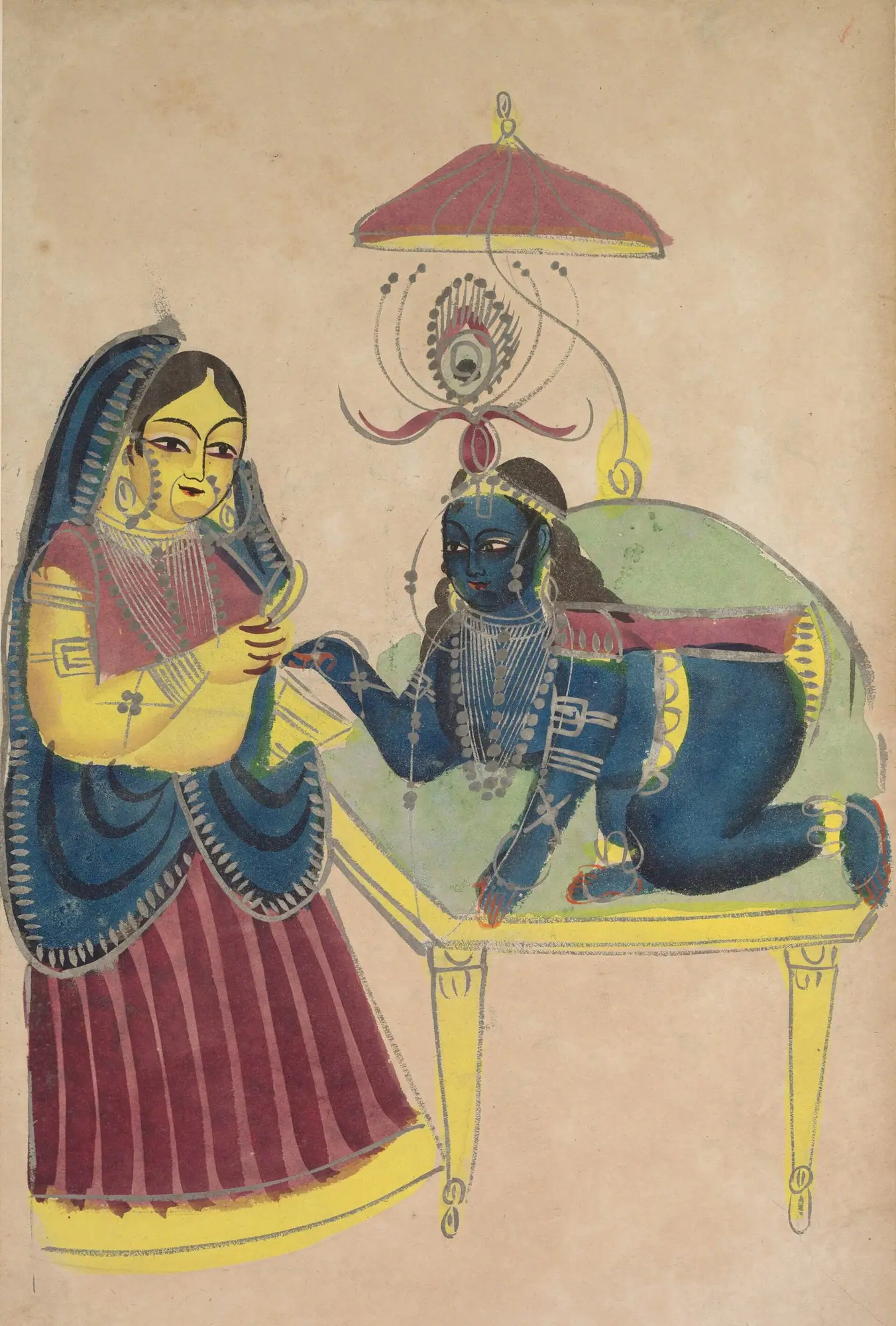
According to the Valmiki Ramayana, baby Hanuman mistook the red rising sun for a ripe fruit and leapt into the sky after it. Indra's thunderbolt struck his jaw, or hanu, and he became known as Hanuman. When the wind god withheld the air in grief, the gods restored the child and gave him many boons.
Editorial team
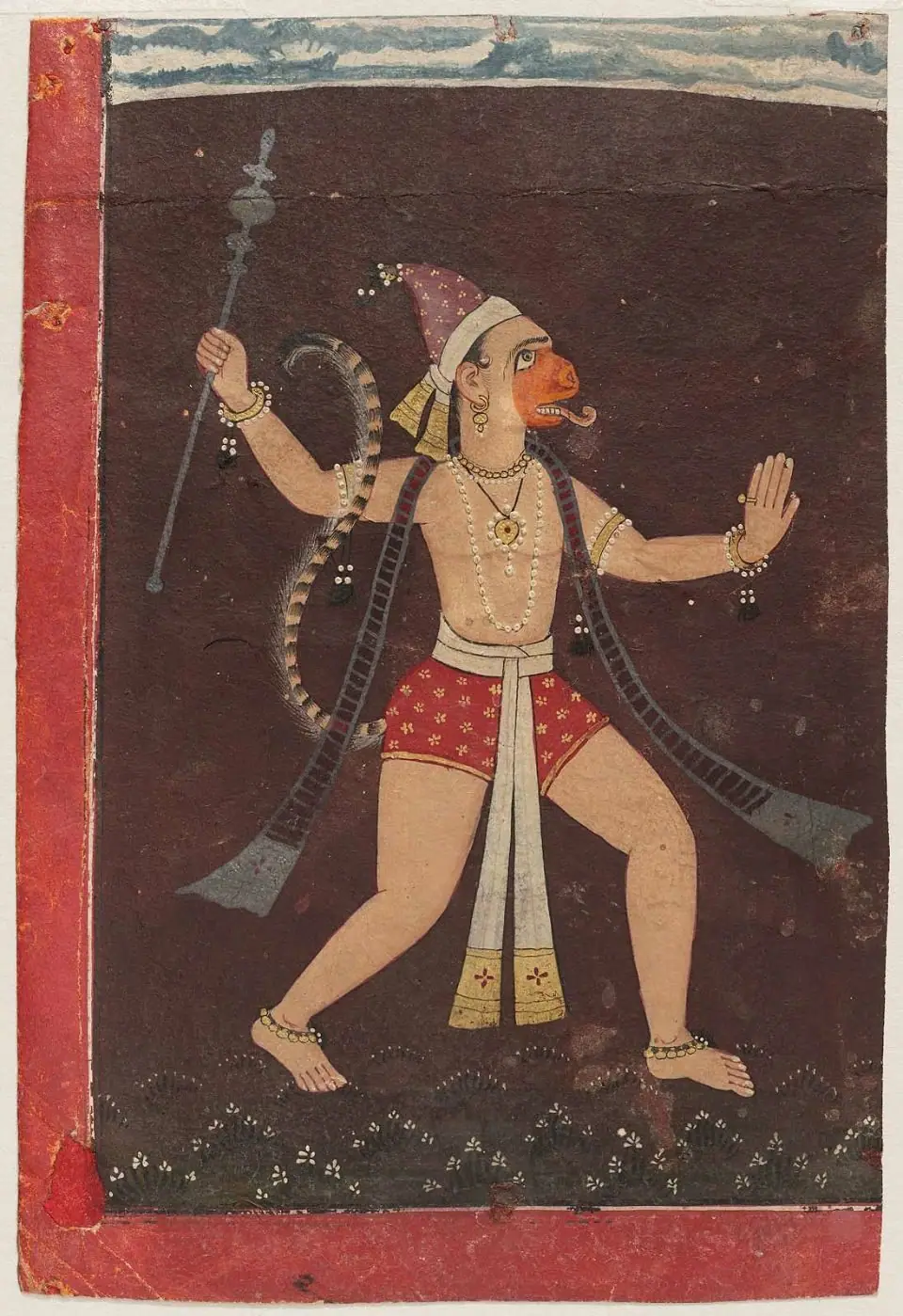
Overflowing with divine boons, young Hanuman became so restless that he disturbed sages at their prayers. According to the Uttara Kanda of the Valmiki Ramayana, the sages cursed him to forget his strength until someone reminded him of it. He then studied the scriptures under the sun god.
Editorial team
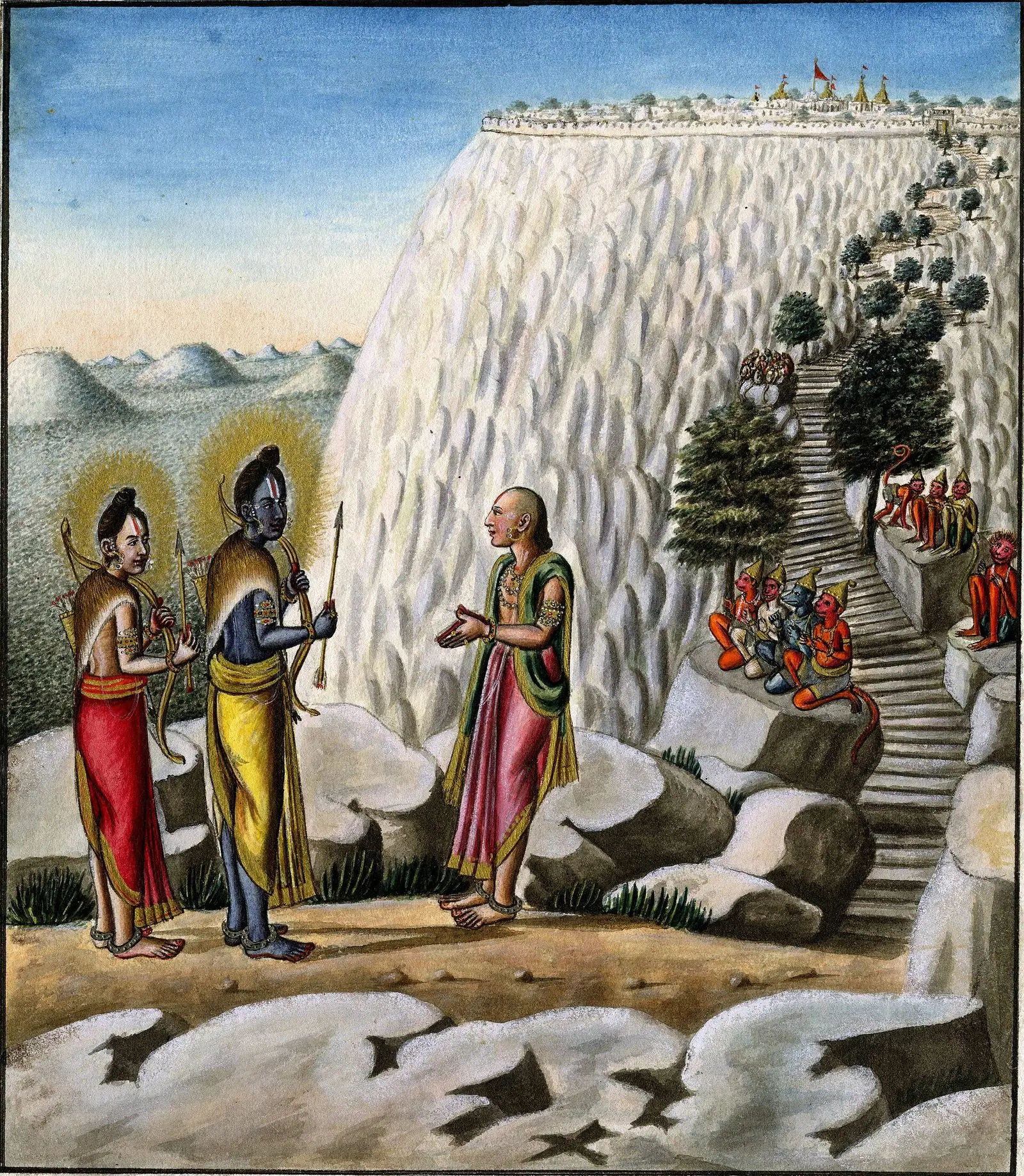
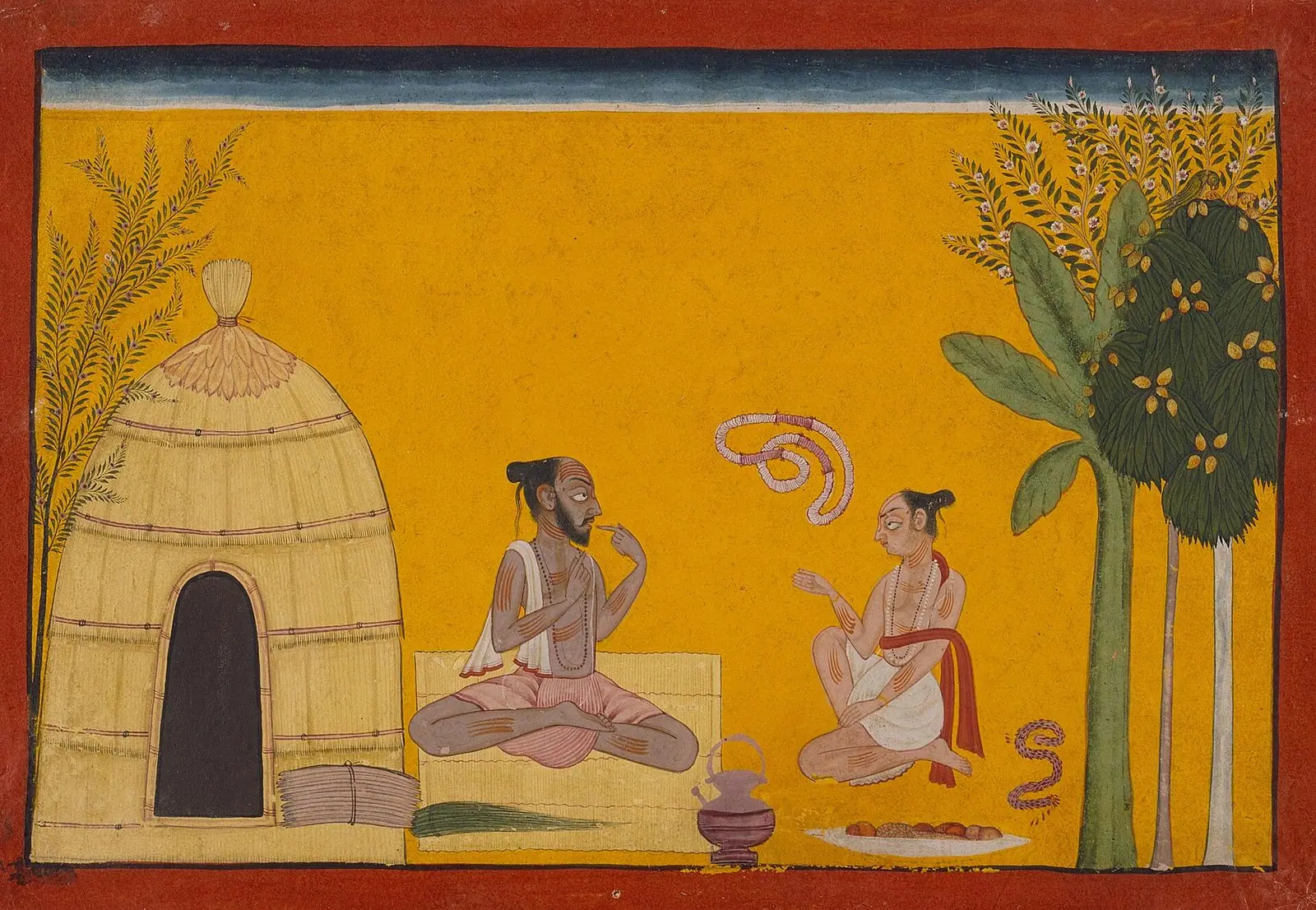
When Rama and Lakshmana, searching for Sita, reached Lake Pampa, the frightened monkey king Sugriva sent Hanuman disguised as a mendicant to find out who they were. Rama was captivated by Hanuman's speech. This meeting led to the friendship between Rama and Sugriva and turned the course of the Ramayana.
Editorial team
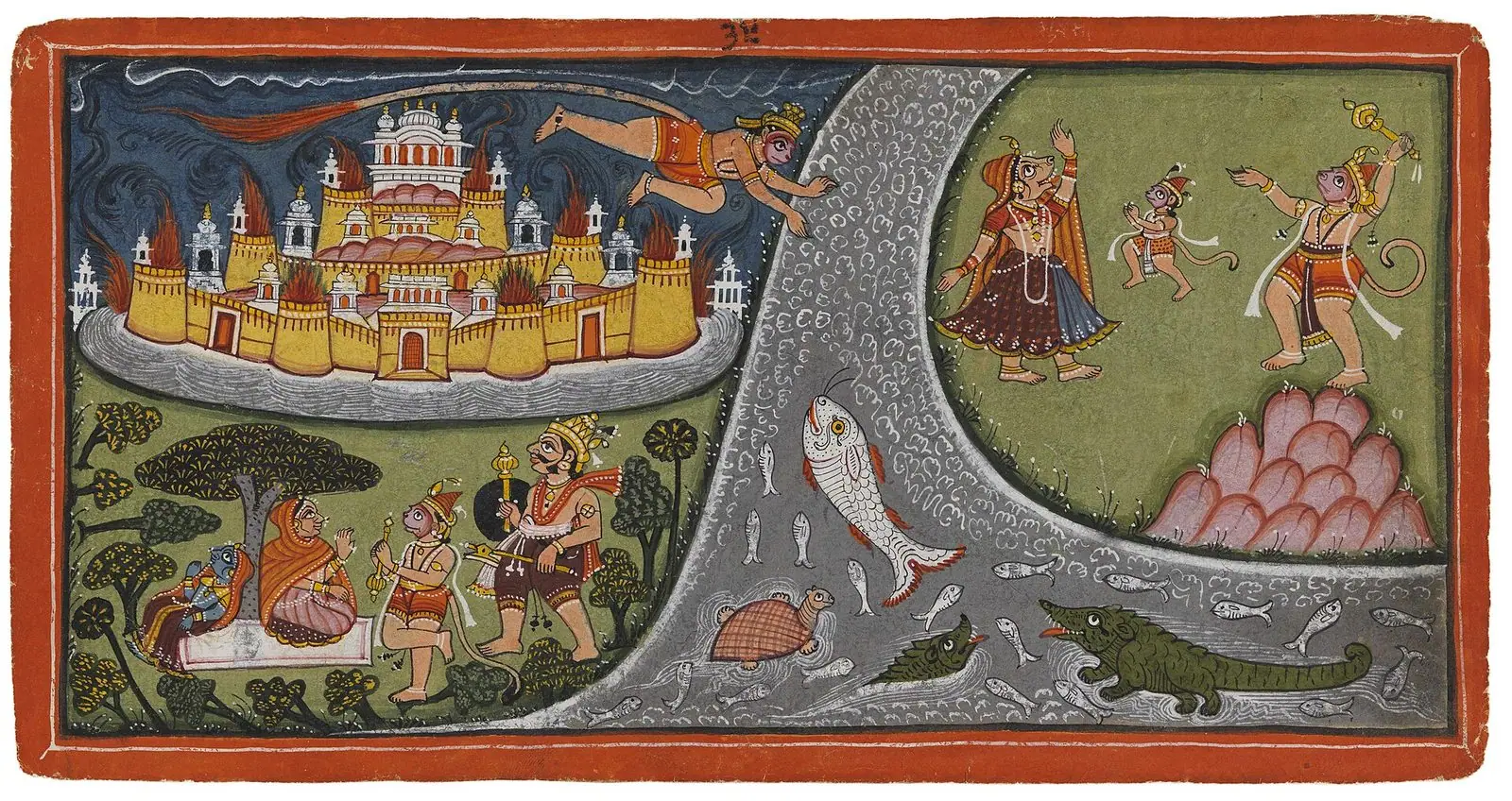
After meeting Sita, Hanuman wrecked the Ashoka grove to test Ravana's strength. Respecting Indrajit's divine weapon, he let himself be bound and fearlessly delivered Rama's message in Ravana's court. When his tail was set on fire he burned Lanka, but then, fearing for Sita, he regretted his own anger.
Editorial team
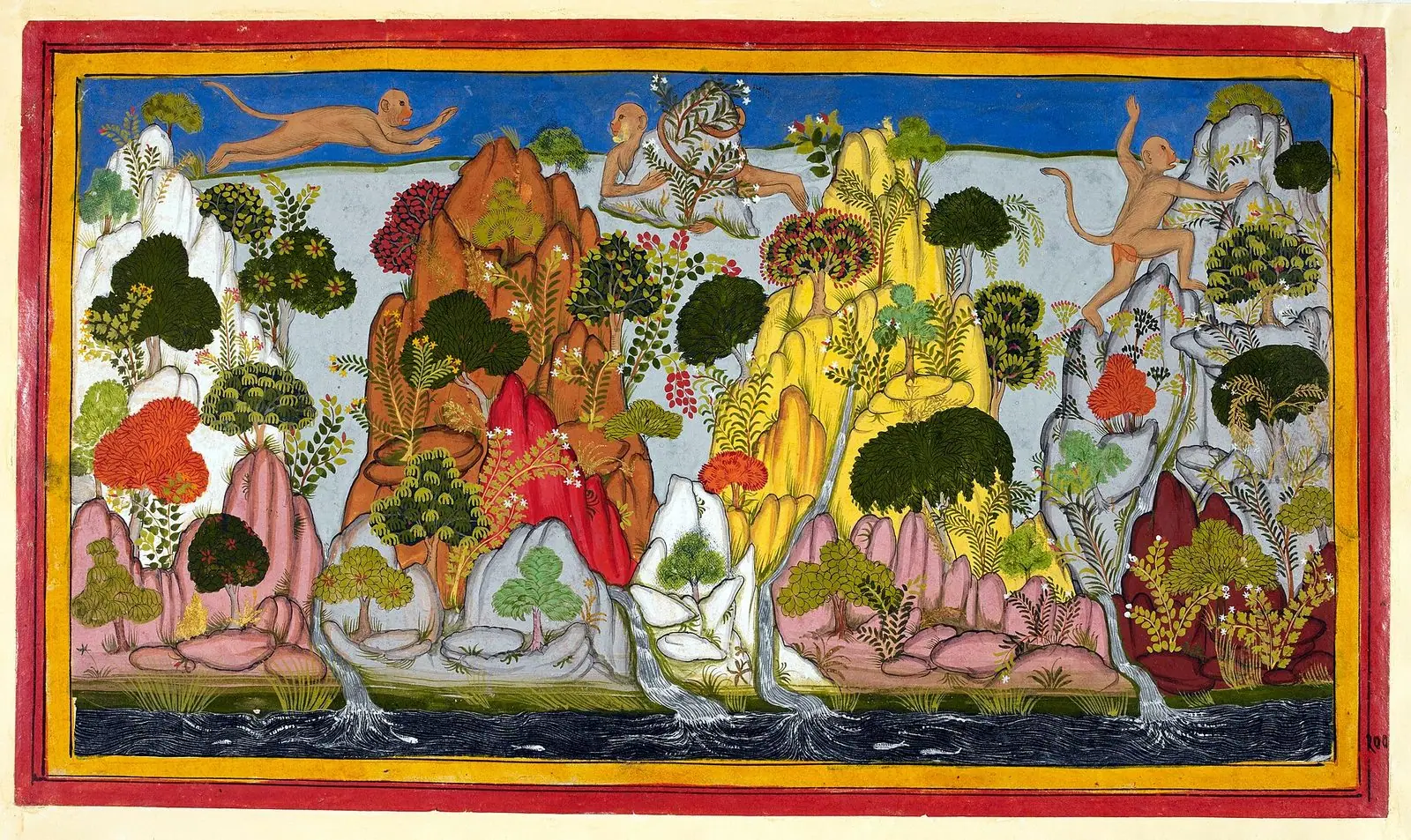
When Lakshmana's life was in danger during the war, Hanuman flew through the night to the Himalayas and brought back a mountain covered in healing herbs. In the Valmiki Ramayana this happens twice, and the Ramcharitmanas adds episodes such as Kalanemi's trick and the meeting with Bharata. This story tells both traditions while keeping them distinct.
Editorial team
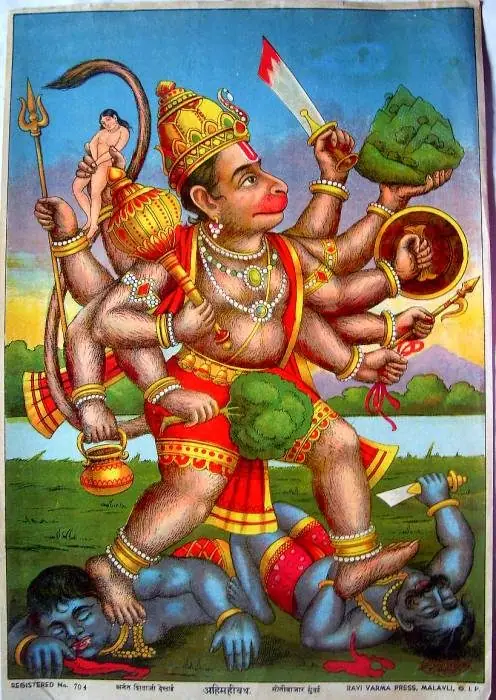
This story is not found in the Valmiki Ramayana; it comes from regional Rama stories such as the Krittivasa Ramayana and from folk tradition. Ahiravana, king of the netherworld, abducted Rama and Lakshmana by deceit. Going to rescue them, Hanuman met his own son, Makardhwaja, and took a five-faced form to slay Ahiravana.
Editorial team
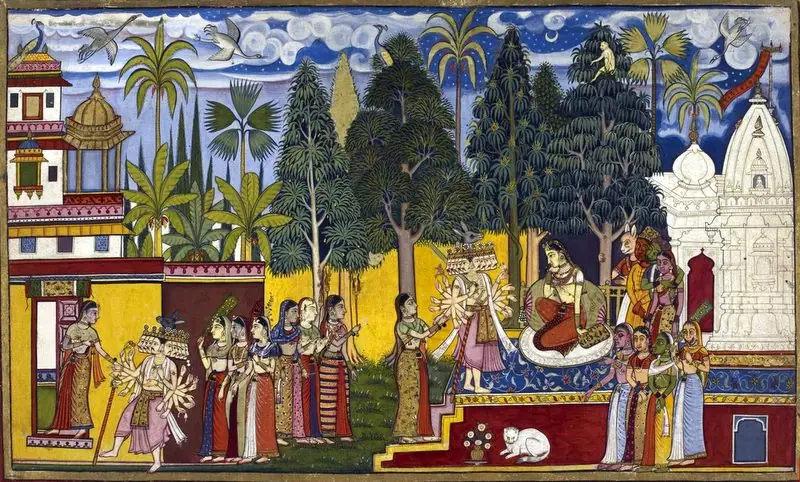
After Ravana's death, Rama sent Hanuman to the Ashoka grove. Hearing the news, Sita was too overjoyed to speak. Hanuman asked permission to punish the rakshasis who had terrorised Sita for months, but she refused, saying the good do not return evil for evil, because there is no one who never does wrong.
Editorial team
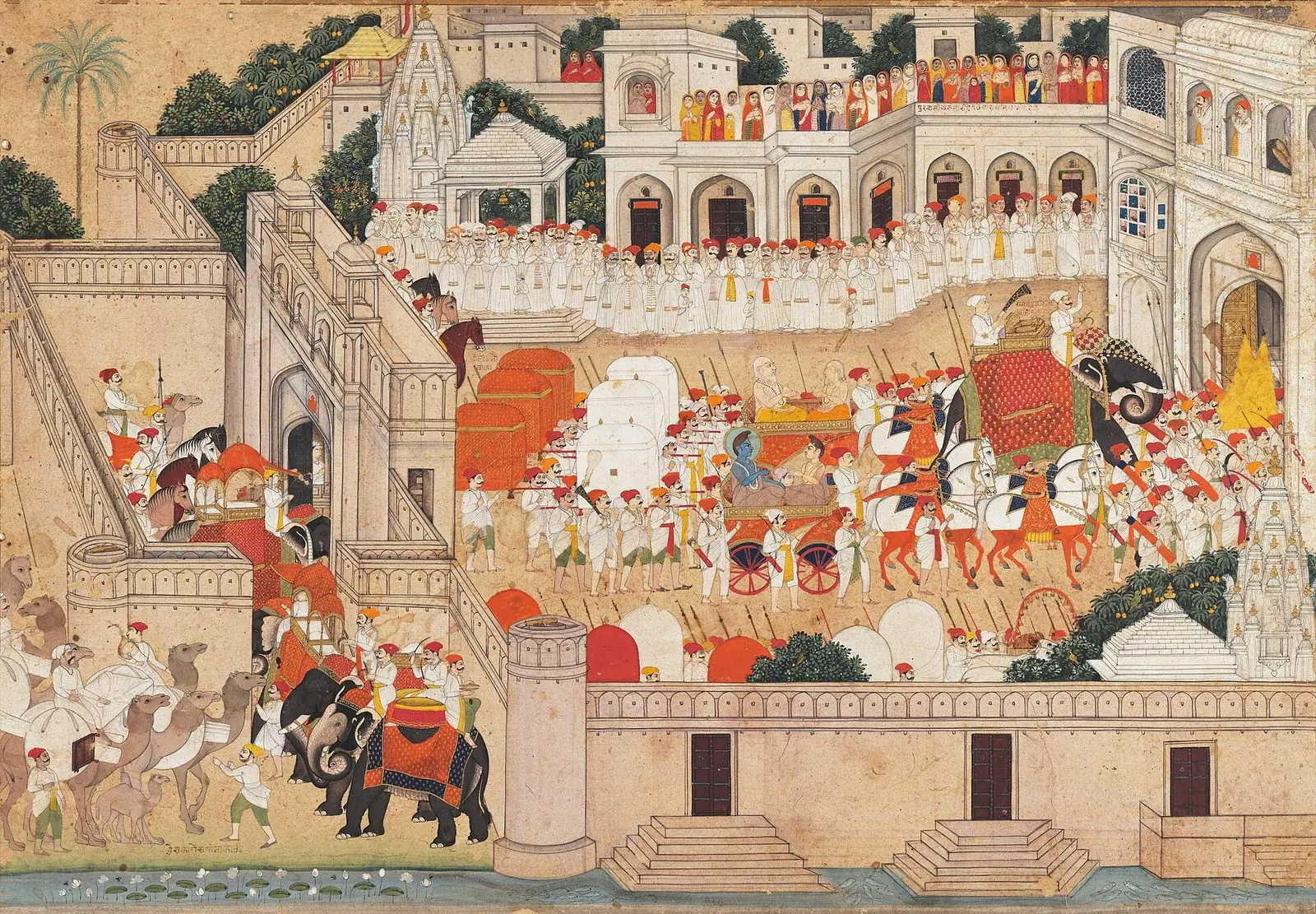
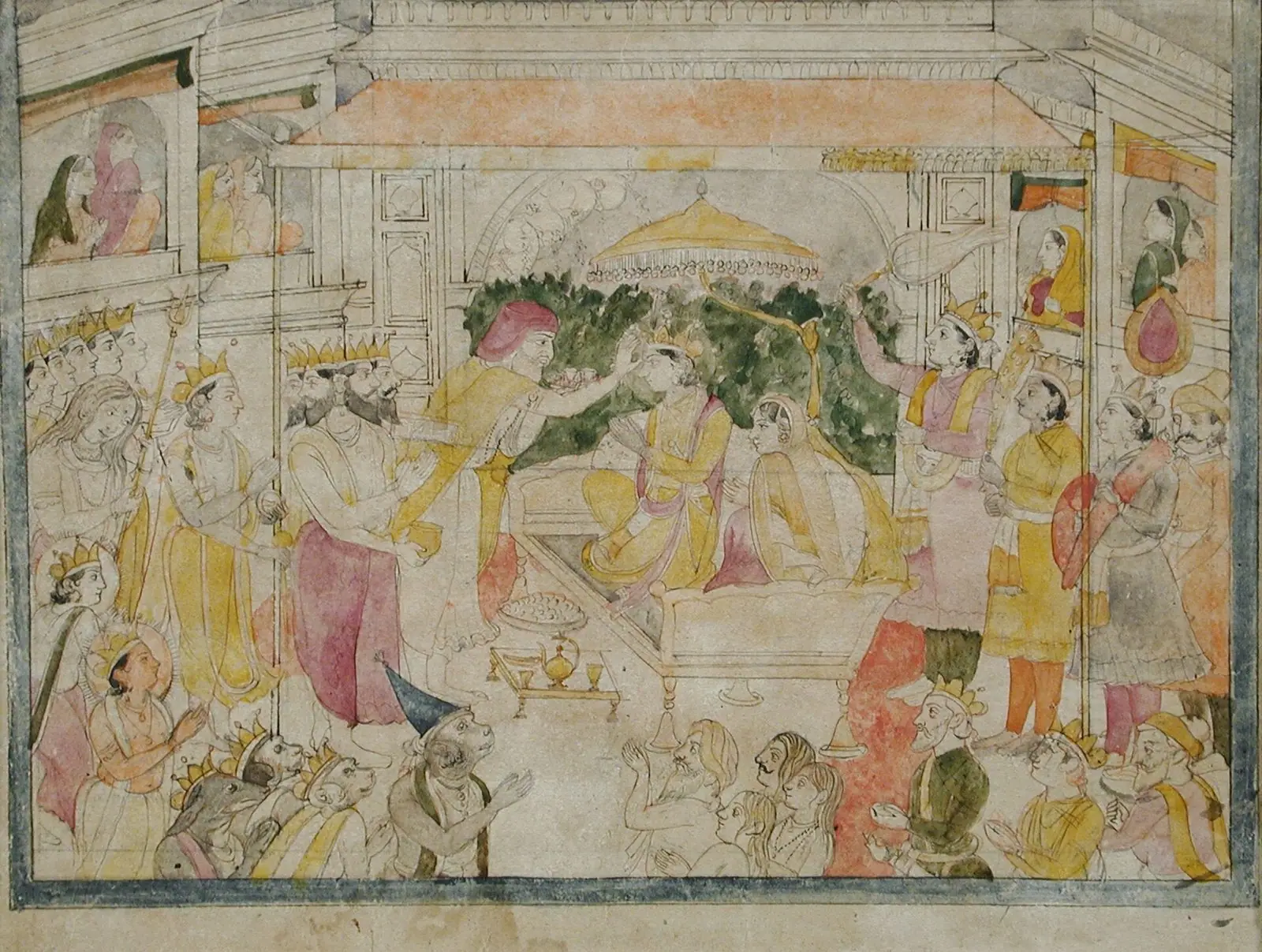
Returning from Lanka, Rama sent Hanuman ahead to tell Bharata of his arrival and to read the feeling in his heart. Hanuman found Bharata at Nandigram dressed as an ascetic, serving before Rama's sandals. Hearing the news, Bharata fainted with joy and said that if a man lives on, joy comes to him even after a hundred years.
Editorial team
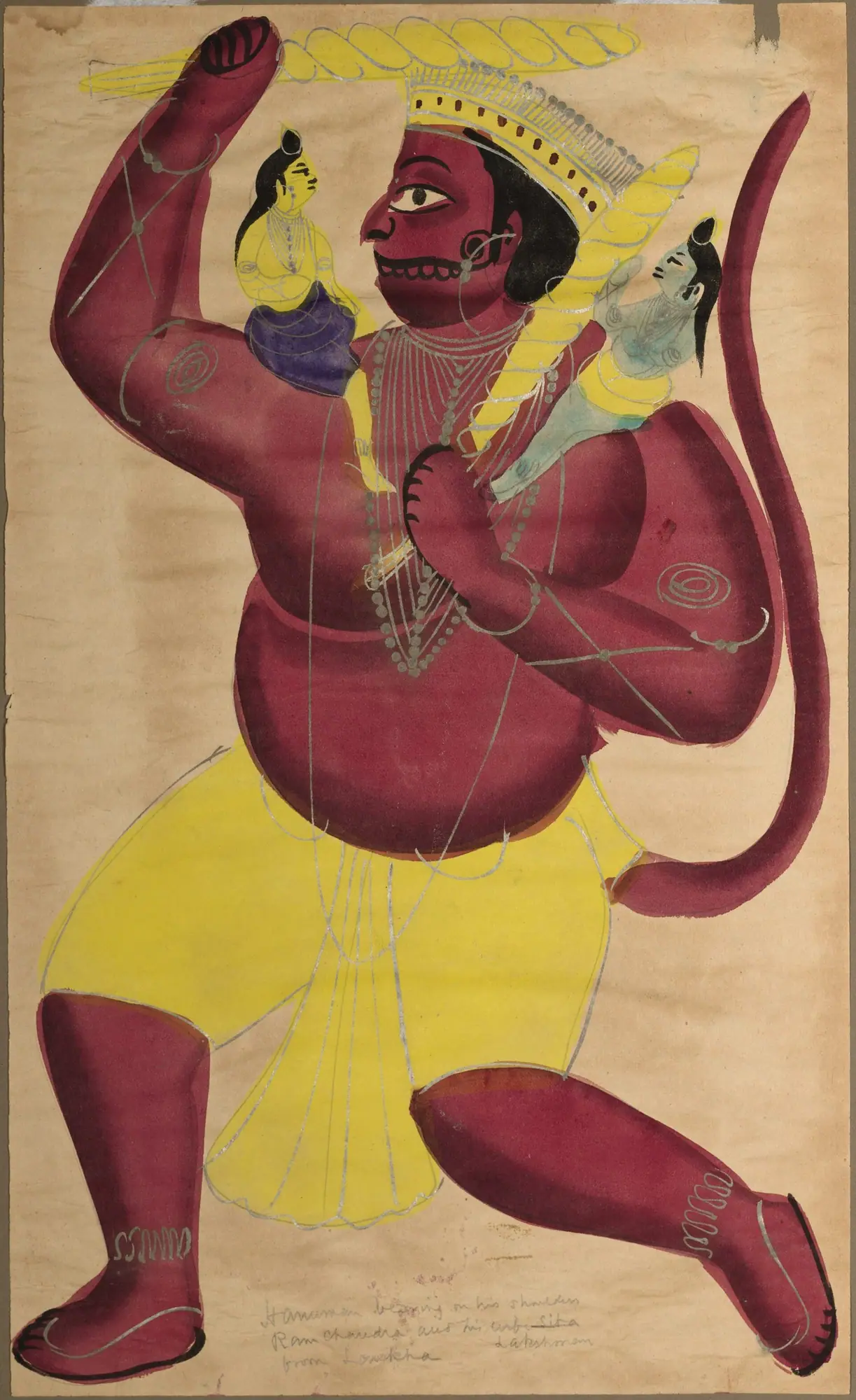
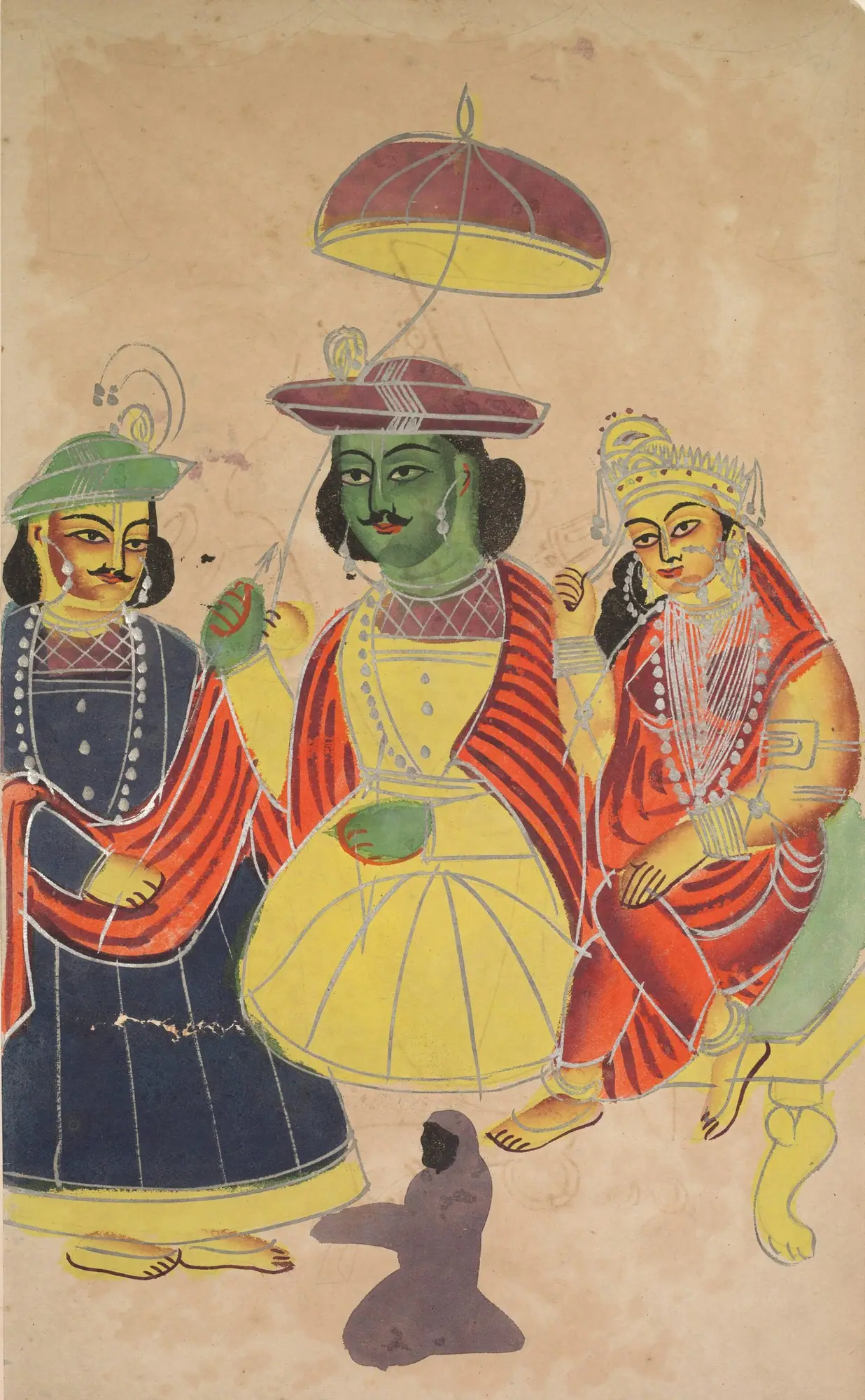
At Rama's coronation, Sita gave her pearl necklace to Hanuman, because Rama had told her to give it to the one with the most radiance, steadiness, wisdom and humility. In later folk tradition, Hanuman searches the pearls for Rama and tears open his chest. At the farewell, Hanuman asked to remain on earth as long as Rama's story is told.
Editorial team
According to a well-known folk tale, after the coronation Hanuman carved the story of Rama on Himalayan rocks with his nails. Valmiki saw it and grew sad that his own Ramayana would be eclipsed. Hanuman then threw the rocks into the sea. The tale is a symbol of selfless service, and the Sanskrit drama Hanuman Nataka is linked to the same tradition.
Editorial team
At the end of the Valmiki Ramayana, Time comes to Rama disguised as an ascetic, and Rama prepares to leave the earth. A popular folk tale adds that, so Hanuman would not stop Time, Rama dropped his ring into the netherworld. Searching for it, Hanuman found a heap of identical rings and understood that in every age a Rama comes and goes.
Editorial team
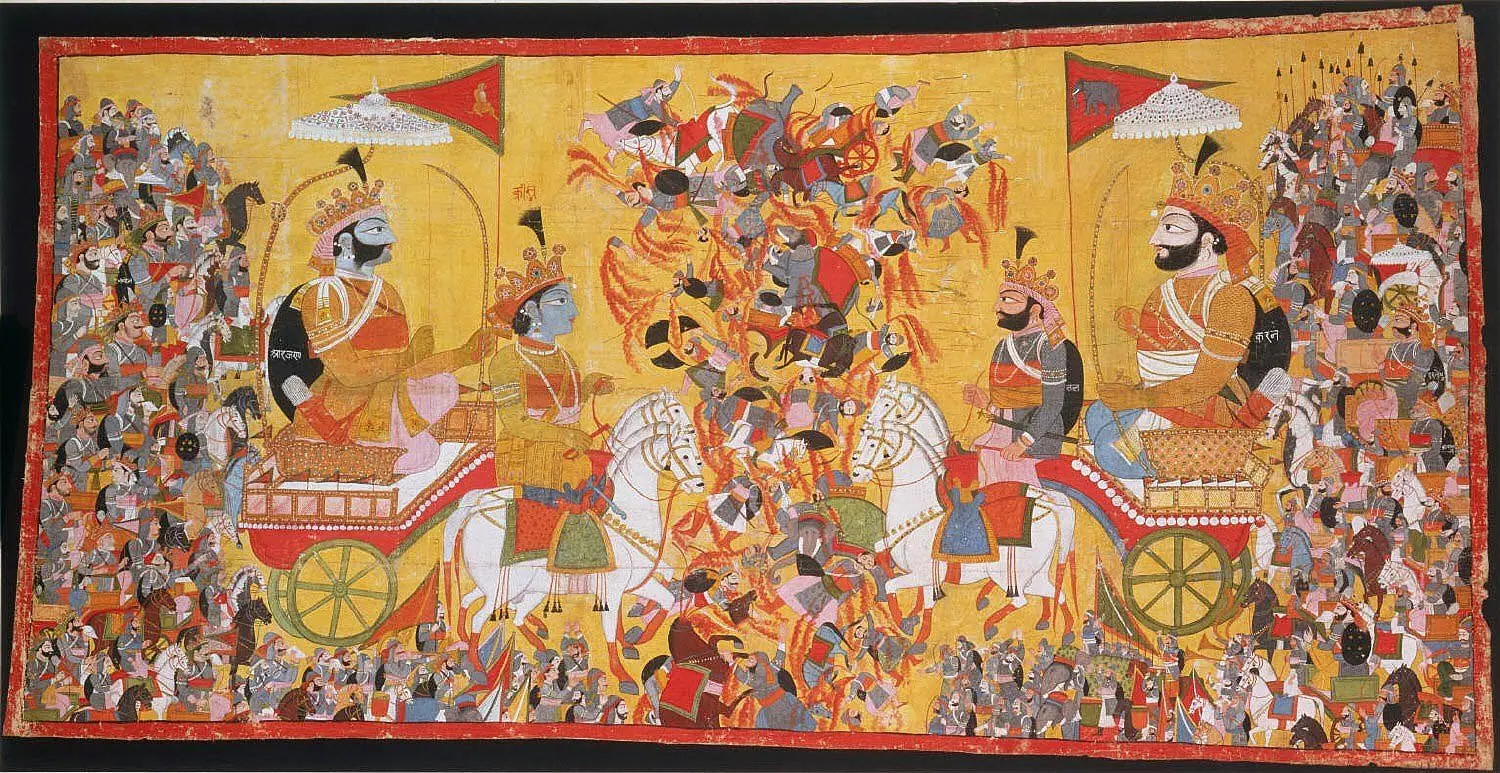
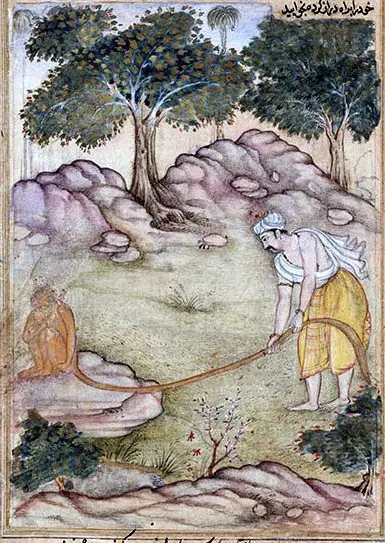
During the exile, Bhima went up Mount Gandhamadana to fetch fragrant Saugandhika flowers for Draupadi. An old monkey lying on the path told him to move its tail aside and pass, but the mighty Bhima could not even stir it. The monkey was his elder brother, Hanuman. Hanuman taught Bhima about the ages, showed his vast form and promised to sit on Arjuna's banner in the great war.